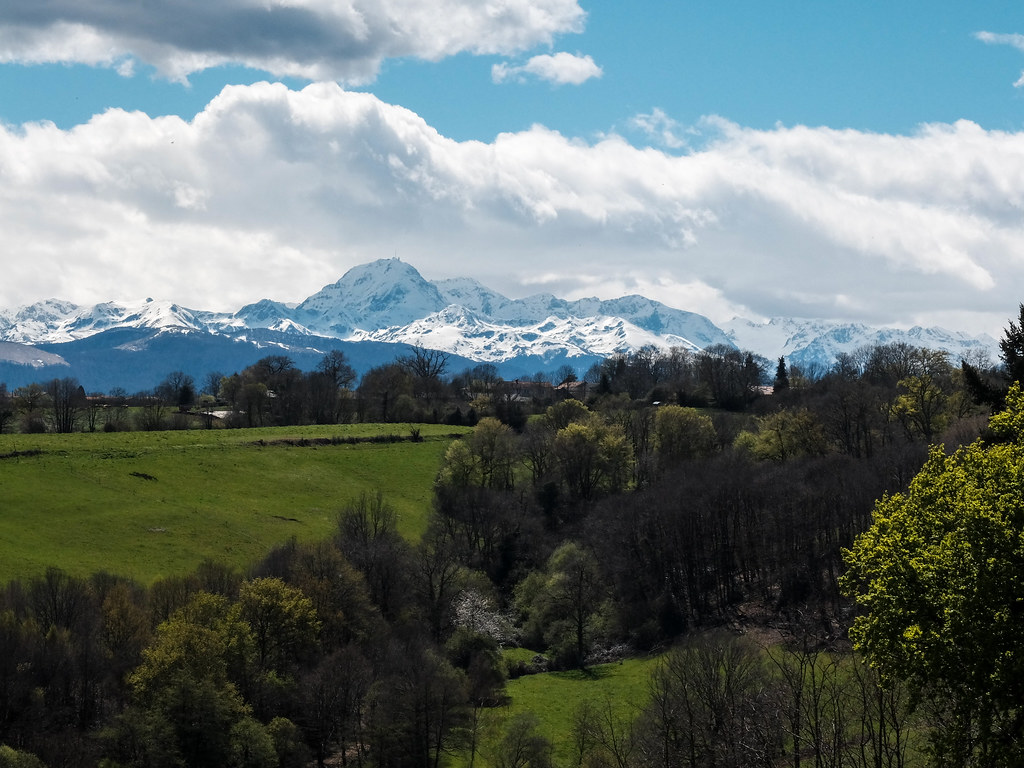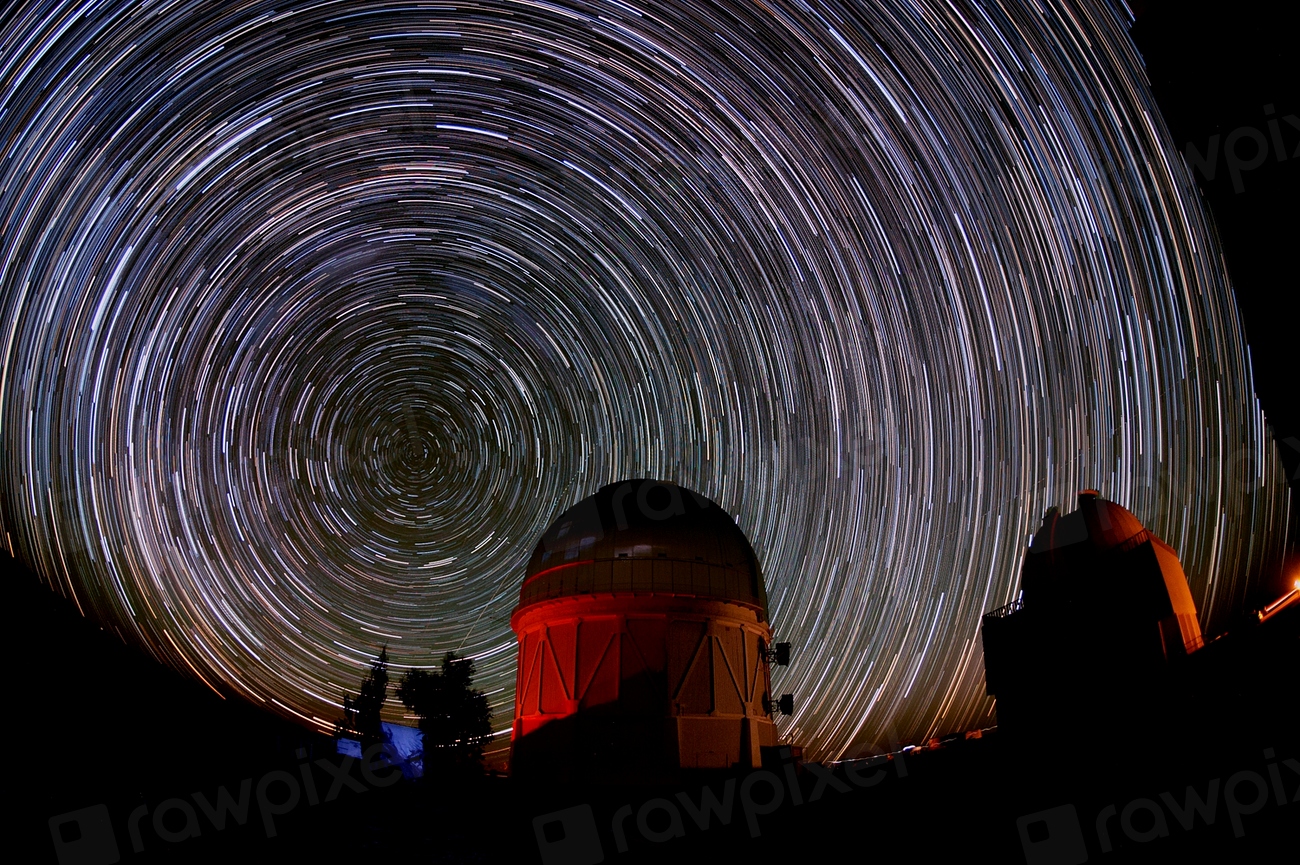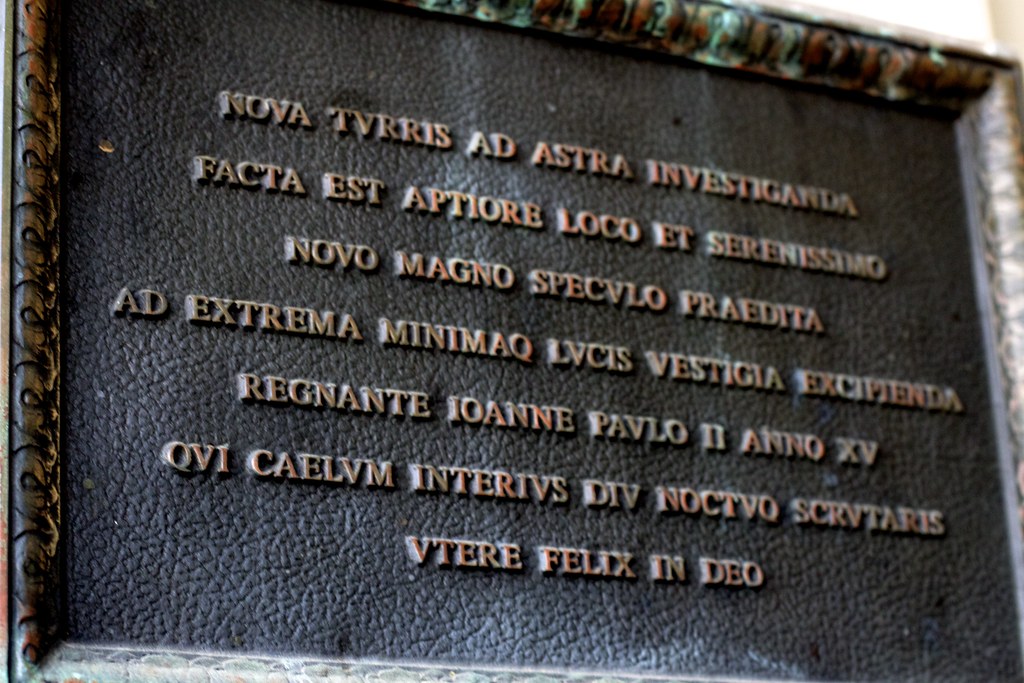
Mount Graham rises to 10,720 feet in the Pinaleño Range of southeastern Arizona, ninety-six miles east of Tucson. The summit road, controlled by the U.S. Forest Service, is closed to the general public for most of the year.
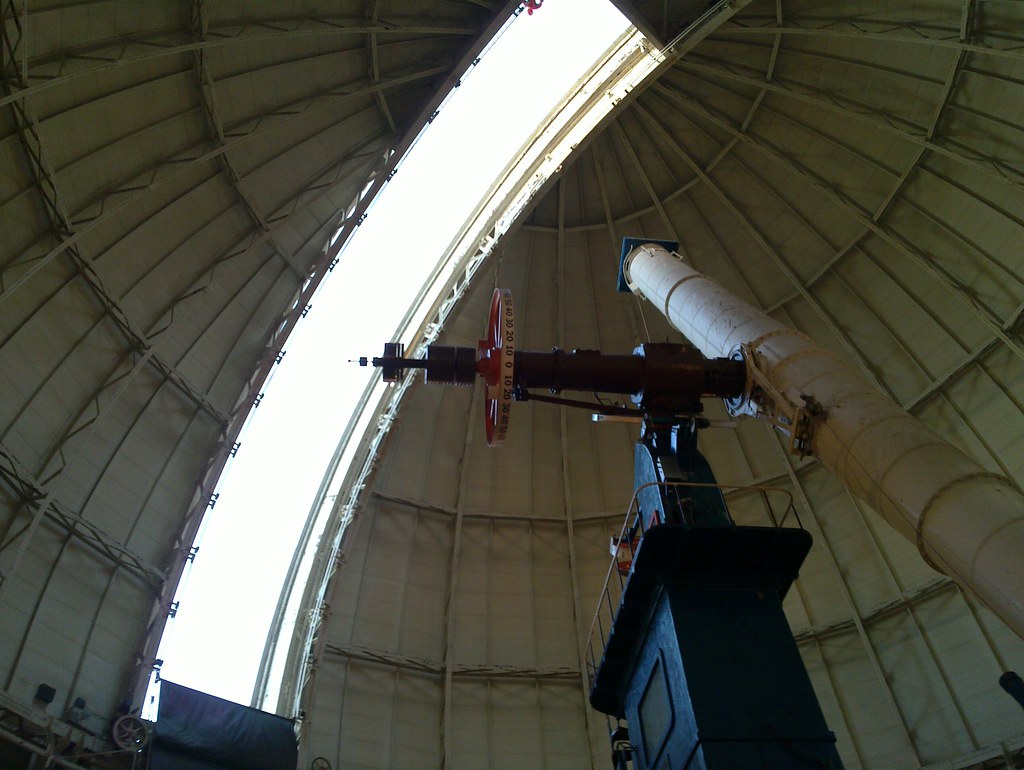
Three observatories share the summit ridge. The Large Binocular Telescope, with its twin 8.4-meter mirrors, is the largest. The Heinrich Hertz Submillimeter Telescope operates at radio wavelengths. The Vatican Advanced Technology Telescope, with a 1.83-meter primary, is the smallest of the three and the oldest.
VATT has operated since 1993. It is owned and operated by the Vatican Observatory, a research institution with origins in the sixteenth-century papal interest in calendar reform, and headquarters at Castel Gandolfo in the Alban Hills outside Rome. The Tucson office is at Steward Observatory on the University of Arizona campus.
The 1.83-meter primary mirror was the first spin-cast mirror produced by Roger Angel's Steward Observatory Mirror Lab. The casting technique, in which molten glass is rotated in a furnace to produce a parabolic shape directly, has since been used for mirrors up to 8.4 meters in diameter. VATT was the proof of concept.
On the night of May 14, 2026, the VATT dome was opened by Christopher Corbally, the British Jesuit astronomer who has served as the Vatican Observatory's vice director and remains a senior astronomer on the staff. Corbally has worked on Mount Graham since the instrument's commissioning.
The observing program that night was a long-running survey of stellar spectral classification. The target list included thirty-two B-type stars in the constellation Centaurus. The instrument was the VATT Spectrograph, a slit-fed grating spectrograph designed in-house and commissioned in 2002.
The Vatican Observatory's research staff is small. Twelve full-time astronomers. The institution does not chase the largest discoveries. Its scientific program emphasizes long-term projects: stellar classification, asteroid astrometry, observational support for the Vatican Observatory's meteorite collection, which is one of the larger such collections in the world.
The meteorite collection, held primarily at Castel Gandolfo, includes roughly twelve hundred specimens. Much of the collection was donated by the Marchese Boris de Mauroy in 1935. Its scientific use is in cosmochemistry studies, often in collaboration with researchers at the University of Arizona's Lunar and Planetary Laboratory.
VATT is one of the smaller instruments still operating on a Tier 1 dark site in North America. Mount Graham's sky-darkness is comparable to the best sites in Chile, with median seeing around 0.9 arcseconds. The summit is high enough to be above most weather and most of the water vapor in the atmosphere.
Access to the mountain remains contested. The original siting in the late 1980s drew opposition from the San Carlos Apache Tribe, for whom Mount Graham is a sacred site, and from environmental groups concerned with the survival of the endemic Mount Graham red squirrel. Both opposition movements continue.
The squirrel population, monitored by the U.S. Fish and Wildlife Service, was estimated at 144 individuals in the 2024 survey, down from a pre-fire estimate of 252 in 2017. The 2017 Frye Fire burned much of the squirrel's preferred spruce-fir habitat. The observatory facilities were defended by firefighters and were not damaged.
Corbally's observing run that night ran from 9:30 p.m. to 4:15 a.m. The B-type star spectra were collected with two-minute exposures at a resolving power of roughly 5,500. The data went to a graduate student at the University of Padua who is finishing a dissertation on B-star chemical peculiarity.
Between target slews, Corbally talked about the slow pace of the Vatican Observatory's scientific work. A spectral classification project may run for fifteen years before its final catalogue is published. There is no pressure to produce headline results. The observatory exists, in part, to demonstrate that the Catholic Church takes empirical astronomy seriously.
The current director, Brother Guy Consolmagno, is a planetary scientist who completed graduate work at the University of Arizona. He has served as director since 2015. Consolmagno is one of the more publicly visible Vatican Observatory staff, having published popular books on the relationship between religious belief and scientific observation.
Whether one is interested in that relationship is a matter of personal disposition. The VATT instrument is interesting independent of the institutional context. It is a well-figured 1.8-meter telescope at a dark high site, with a working spectrograph and a small staff that runs it consistently across decades.
Few private research observatories of this size remain operational anywhere in the world. The Vatican's continued investment in the instrument is, in budget terms, modest: roughly $1.2 million a year in operating costs, of which about a third is covered by partnerships with the University of Arizona.
The dome closed at 4:38 a.m. Corbally and the night assistant drove down the mountain access road in the predawn darkness. The road descent takes ninety minutes. The summit fog rolled in shortly after they left, as it often does in late spring.
The 1.83-meter on Mount Graham will probably continue to operate for as long as the Vatican Observatory continues to fund it, which is to say, for the foreseeable future. The institution's planning horizon, as Corbally noted dryly, is longer than most.