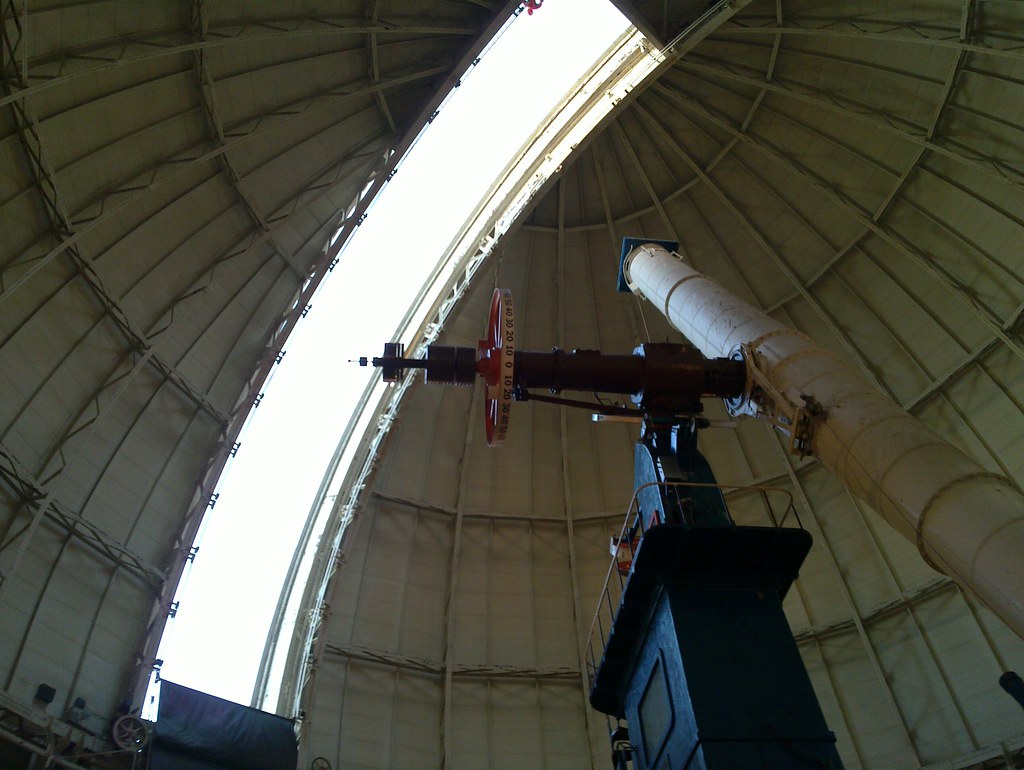
On the night of April 11, 2026, the dome shutter on the 36-inch refractor at Lick Observatory rolled back at 8:47 p.m. The opening produced the same low industrial groan it has produced for one hundred and forty-eight years, since the instrument first saw light in January 1888.
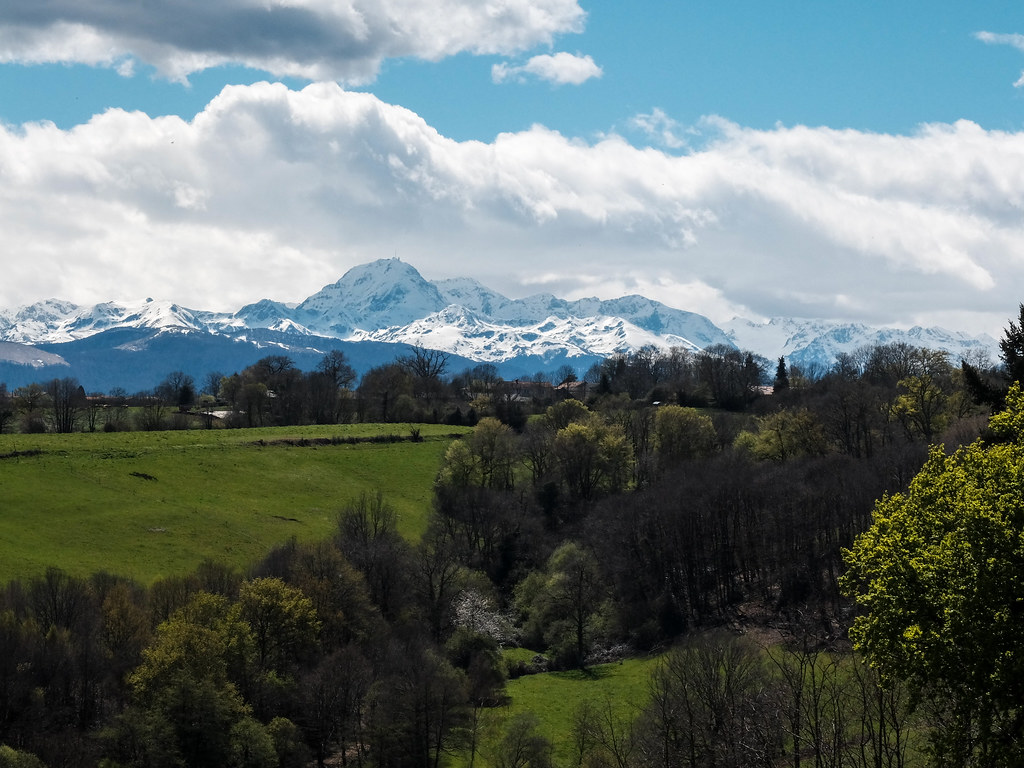
Mount Hamilton sits at 4,209 feet above the Santa Clara Valley, twenty-six miles east of San Jose by the switchbacks of Route 130. The drive takes most visitors an hour and ten minutes from the bottom. The grade reaches eighteen percent on the last two miles.
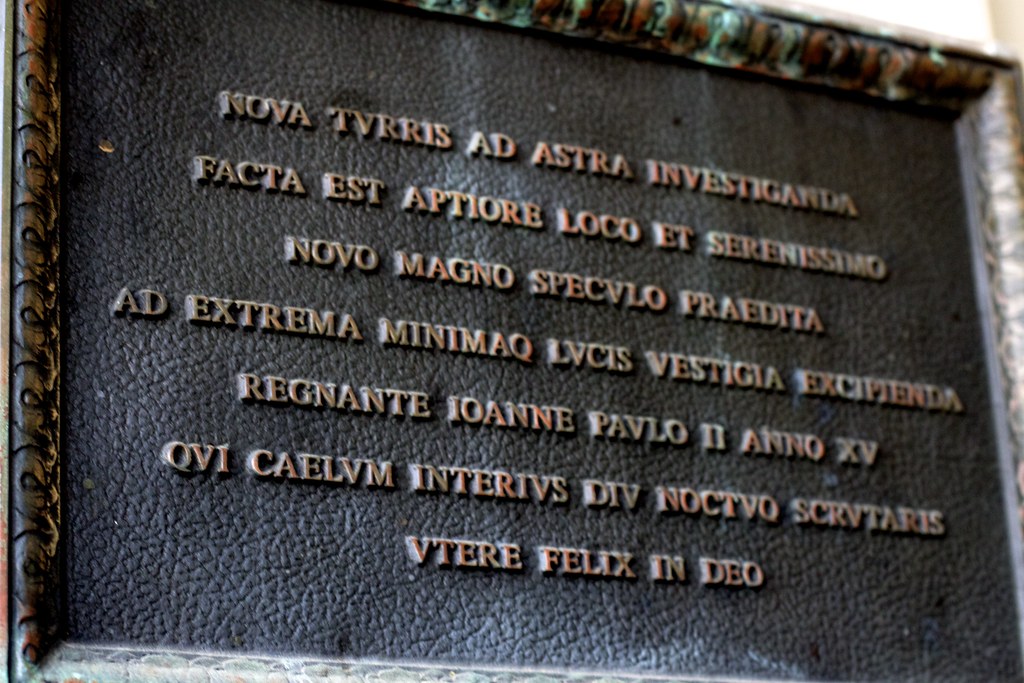
The observatory was the first permanently occupied mountaintop observatory in the world. James Lick, the eccentric Californian who funded it, is buried beneath the floor of the refractor pier, an arrangement he insisted upon before he died in 1876.
Tony Misch, a former Lick staff astronomer who now leads the public program, opened the dome that evening for a group of forty-one ticket-holders. Most had driven up from the South Bay. A retired engineer from Sunnyvale had brought a printed copy of Sherburne Wesley Burnham's 1894 double-star catalogue.
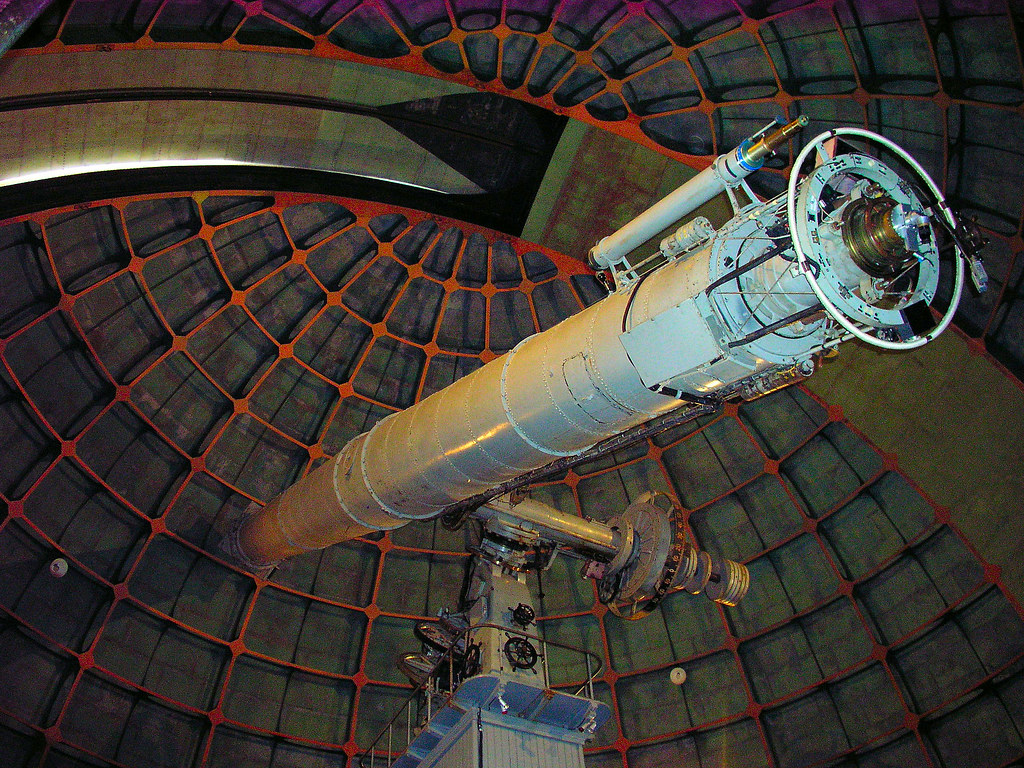
The 36-inch is the second-largest refracting telescope ever built. Only the 40-inch at Yerkes is larger. The Lick instrument is a Clark refractor — Alvan Clark and Sons of Cambridgeport, Massachusetts, who ground the objective lens over five years between 1880 and 1885.
On the visit night, Misch pointed the telescope at the double star Algieba in Leo. The pair separated cleanly at 90x. A nine-year-old at the eyepiece said the orange one looked larger. Misch told her she was correct: it is.
Lick's instruments are no longer at the cutting edge of professional research. The University of California operates larger facilities at Keck on Mauna Kea and the Thirty Meter Telescope project, which remains stalled. But Mount Hamilton has not become a museum.
The 3-meter Shane Reflector, completed in 1959, runs five nights a week with the Automated Planet Finder, a robotic spectrograph that surveys nearby stars for exoplanets. The Shane has produced over a hundred and twenty confirmed planet detections since 2014.
Funding has been a recurring concern. In 2014 the UC system proposed closing the mountain to operations. A coalition of alumni, amateur astronomers, and small donors raised enough to keep the lights on. The current operating budget is roughly $1.5 million a year, of which about a third comes from the public visit program.
The visitor center sits in the former Brashear Hall, named for John Brashear, the Pittsburgh optician whose firm supplied many of Lick's auxiliary instruments. The hall holds an original Burnham log book, opened to the night of October 7, 1899, when Burnham logged a faint companion to a star in Pegasus he had not previously catalogued.
On the spring evening, the air at the summit was 52 degrees Fahrenheit at sunset. By 11 p.m. it was 41. The visitors had been warned to bring jackets. Most had not brought enough jacket.
The 36-inch tube is forty-nine feet long and weighs roughly 25,000 pounds with its cell and counterweight. The motion of the dome and the slewing of the tube are still partially manual. A staff member walks a hand crank to fine-position the eyepiece end at the user's height.
Misch noted that the original clock drive, a falling-weight mechanism designed by Warner and Swasey of Cleveland, was retired in the 1970s in favor of a modern motor. The original is on display two floors down. It still keeps time, slowly, in the way old mechanisms do.
Sky and Telescope ran a feature in March on Mount Hamilton's centennial-plus-twenty milestone. The piece quoted Burt Topham, a longtime Lick docent, as saying that the building had outlived three generations of working astronomers and would likely outlive a fourth.
The summit's resident population is small. Eleven full-time staff live on the mountain or commute from the lower campus. The schoolhouse, which once served the children of the original telescope makers, closed in 2004.
The fire of August 2020 came within two ridgelines of the observatory. Crews held it at a firebreak built in the 1950s and updated in 2018. The 36-inch dome was wrapped in fire-retardant cloth for four days. It opened again that October.
Visitors that April evening were given a thirty-minute tour of the dome floor, then a ninety-minute observing session split between the refractor and a smaller 12-inch instrument in the adjacent dome. Saturn, low in the south after midnight, drew the longest line.
By 1:15 a.m. the last visitors had returned to their cars and begun the descent. The mountain road is closed to upbound traffic at sunset on observing nights, to preserve dark conditions for the working telescopes. Downbound vehicles travel without headlamps for the first half mile.
Misch closed the dome at 1:34 a.m. The sky in the east had not yet begun to lighten. The mechanism's groan, as the shutter rolled back into place, was the same groan as the opening, in reverse.
Lick is not the future of optical astronomy. It is one of the past's better survivals, kept running by a small operating budget and a public that still climbs the mountain to look through a Clark lens. That is enough, on a clear April night, to count as a working observatory.