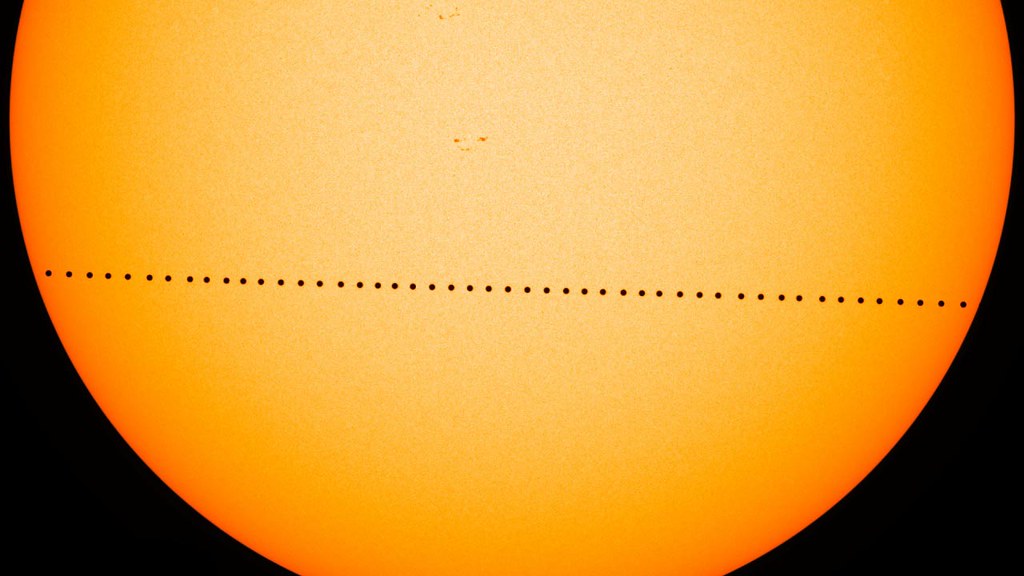
On 13 November 2032, the planet Mercury will pass directly between the Sun and the Earth, appearing in silhouette against the solar disc for approximately five hours and forty minutes. It will be visible in part or in whole from most of the Americas, western Europe, west Africa, and the eastern Pacific.
It is the next transit of Mercury after the one of 11 November 2019. The series of such transits is rare enough, and the technical demands particular enough, that the amateur solar community has begun planning for it six years out.
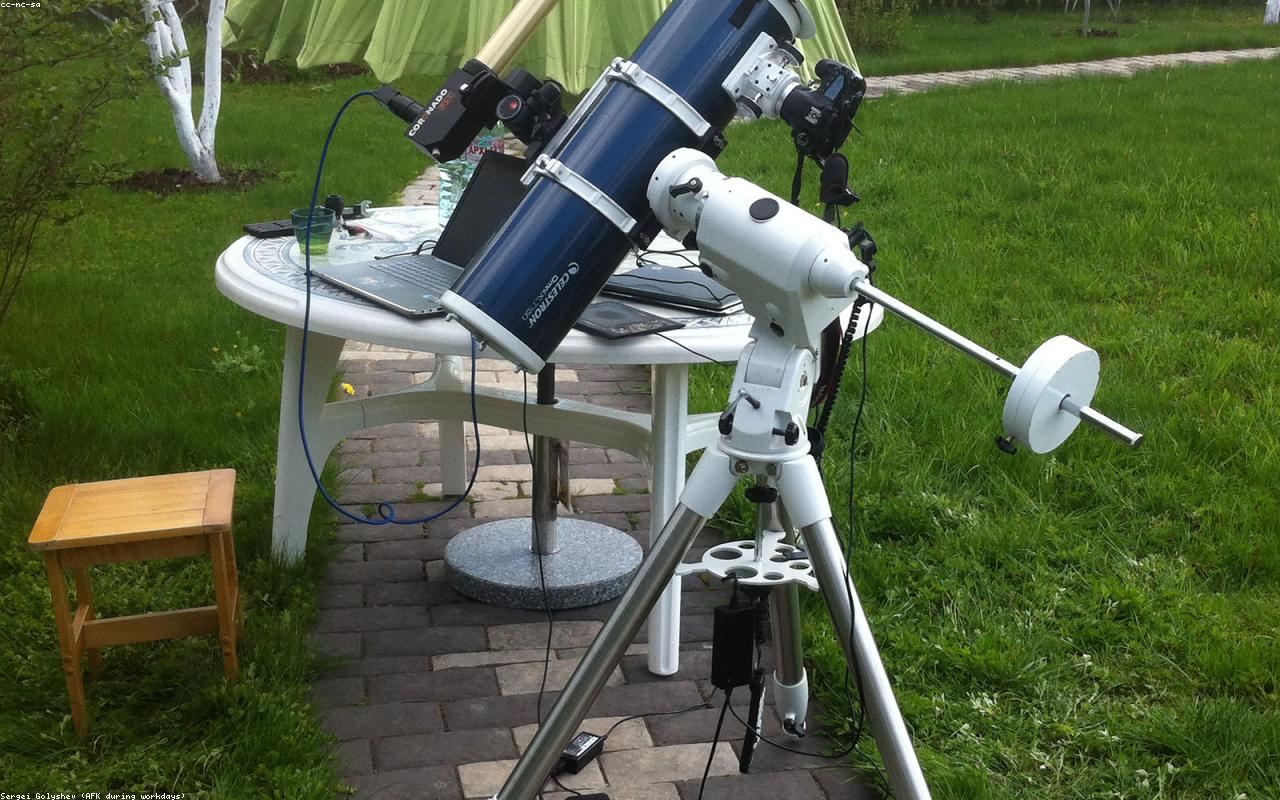
Cosmo Tate spent the morning of 6 May 2026 at Sky Meadow Observatory in Williamstown, Massachusetts, watching a rehearsal of sorts. The Williamstown Amateur Astronomical Society had set up four instruments on the lawn, in approximately the configuration each member intended to use on transit day in 2032, and were drilling the procedure with the Sun playing the role of the Sun and a printed disc of Mercury overlaid on a projection screen.
It looked silly. It was not silly.
Transits of Mercury occur in May or November, only, because of the geometry of Mercury's orbit relative to the ecliptic. November transits are more common and slightly longer in duration. The thirteenth of November falls in late autumn for North American observers, when the Sun rides low and the air can be steady but the temperatures already test the patience of the standing observer.
The 2032 event begins, for an observer in Boston, at approximately 8:54 a.m. local time and concludes at approximately 2:34 p.m. Mid-transit falls near 11:44.
Mercury subtends an angular diameter of roughly ten arcseconds in transit. This is large enough to be visible with a good binocular at low magnification, properly filtered, and large enough to be resolved as a dark disc, not a point, in any telescope of fifty millimetres or more.
What it is not large enough for is the unaided eye. A pinhole projection of the Sun, of the kind that works adequately for a partial eclipse, will not show Mercury. The contrast is wrong and the resolution is insufficient.
The Williamstown rehearsal addressed the most common failures of amateur transit observation, which Tate notes are not optical but logistical.
The first failure is filter readiness. An amateur who does not regularly observe the Sun discovers, on the morning of a transit, that the filter purchased eleven years earlier has tears, or that the cell does not fit the current objective, or that the filter is in a box in the basement and the basement key is at the office.
The Williamstown group has agreed to inspect every member's solar filter once per year, in October, in the years between now and 2032. It is the kind of standing agenda item that sounds bureaucratic and turns out to be the difference between observing a transit and missing one.
The second failure is mount tracking. A non-tracking mount requires constant adjustment over a five-hour event. By hour three, the observer is tired, the Sun has drifted, and the moment of egress is missed.
Members of the Williamstown society without driven mounts have begun saving for them. A used equatorial mount with a working motor drive, adequate for a six-inch refractor, can be assembled from the used market for between four hundred and seven hundred dollars in 2026 prices.
The third failure is timing. The four contacts of a transit, the moments when the planetary disc touches and crosses the limb of the Sun, are the only events of scientific value an amateur can usefully record. The first contact, exterior ingress, is the most demanding, because the observer must be watching the right point on the limb at the right second.
Tate notes that the 2019 transit produced many photographs and few useful contact timings, partly because amateurs underestimated the difficulty of capturing first contact and partly because the imaging community had drifted toward longer exposures unsuited to that single brief moment.
The Williamstown group is practising contact timings on the limb of the Moon during lunar occultations, which present the same observational challenge in microcosm.
The Black Drop effect, well known from the historical Venus transits and weaker but still present at Mercury, will appear briefly between second contact and the start of the transit proper. It is an optical phenomenon, a small distortion as the planet's disc appears to remain tethered to the Sun's limb for several seconds longer than the geometry would predict.
It is no longer mysterious. It is the product of seeing, instrumental resolution, and the contrast gradient at the limb. Amateurs in 2032 should expect to see it, briefly, and not be confused by it.
Tate suggests the most useful preparation for 2032 is not equipment but practice. An amateur who has observed the Sun in white light through fifty separate sessions over the next six years will be a better transit observer than one who has bought the finest filter and used it twice.
Solar observation builds a kind of perceptual literacy that does not transfer from night-sky work. The limb has a different character at different magnifications. Sunspots in transit, near the trajectory of Mercury, can be momentarily confused with the planet itself if the observer is not used to the scale.
Practice in the years between is what closes that gap.
Tate left Williamstown around two in the afternoon. The Williamstown group was breaking down equipment and arguing amiably about whether to schedule the next rehearsal for September or November. The transit was still six and a half years away. It seemed close enough to make the question matter.
Mercury, on 6 May 2026, was on the far side of the Sun, invisible to terrestrial telescopes. It will pass before the disc in 2032. The work between then and now is the practice of being ready.
Filed under