Daniel Voss, an accountant in Karlsruhe, Germany, decided in late December 2025 that he would spend the coming year observing the night sky from his back garden without buying a single piece of equipment. He owned no telescope. He owned no binoculars. He owned a folding wooden chair, a phone with a red-light app, and a printed copy of the Sky and Telescope monthly star chart.
His garden is small and lies in a Bortle 5 zone. The streetlight directly behind his property is sodium-orange and was, at the start of the year, his single largest complaint.
On the night of January 4, 2026, he sat in the chair for an hour and timed his dark adaptation. After fifteen minutes he could see the Pleiades clearly as a small cluster. After thirty he could count six of the seven traditional members and a hint of a seventh.
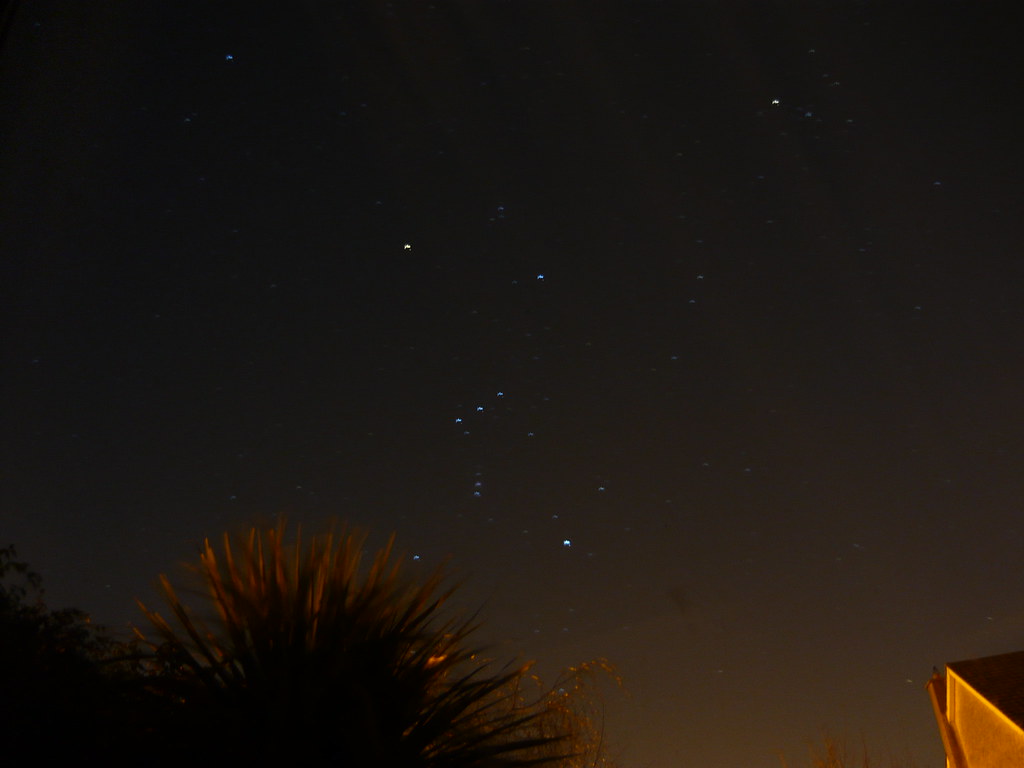
He logged Orion's Belt and then attempted to find the Orion Nebula with naked eye. He wrote in a small Leuchtturm notebook: visible as a faint smudge below the belt; not impressive but real.
Naked-eye astronomy from a suburban garden is an exercise in lowered expectations and recovered attention. There is no question that a $300 pair of binoculars would have shown Voss more in the first session than he would see all year. But that was not the point of the experiment.
He had read, somewhere, that the human eye is the original instrument of astronomy, and that for the entirety of the discipline's history before Galileo, every observation in every catalogue was made without optical aid. He wanted to know what that was like.
By February he had learned the major winter constellations cold. Orion, Taurus, Gemini, Canis Major, Canis Minor, Auriga, Perseus. He could draw their outlines from memory.
He had also begun to notice the planets. Jupiter, in February 2026, was a bright object in the evening sky in Aries. Mars was dim and red in Cancer. Saturn was a morning object low in the southeast before dawn. Voss made a habit of stepping out on the way to the kitchen at 5:45 a.m. to confirm Saturn's position.
By March he had encountered his first frustration with the suburban sky. The Beehive Cluster, M44, in Cancer, is theoretically a naked-eye object at magnitude 3.7. From Voss's garden it was invisible. He logged seven attempts in March without success.
He drove forty minutes east on March 28 to a small lay-by near Bruchsal where the sky was darker, and saw the Beehive easily as a small fuzzy patch. He drove home and wrote: my garden is not enough for the dimmer Messier objects; this is a real limit.
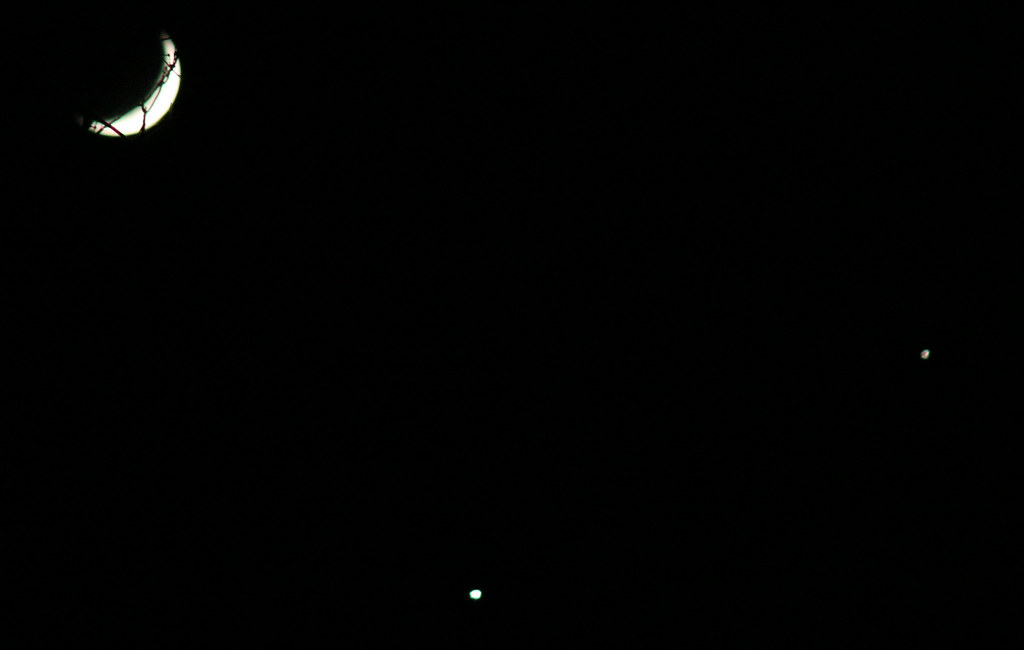
April brought longer twilight and shorter observing windows. He turned his attention to the planets. On April 18, Jupiter and the Moon were within three degrees of each other in the early evening sky, and he watched them for an hour from his chair.
May brought the first warm evenings. He began to log the rising of summer constellations: Boötes overhead, Hercules climbing in the east, Vega visible at 10 p.m., and by month's end, the Summer Triangle complete.
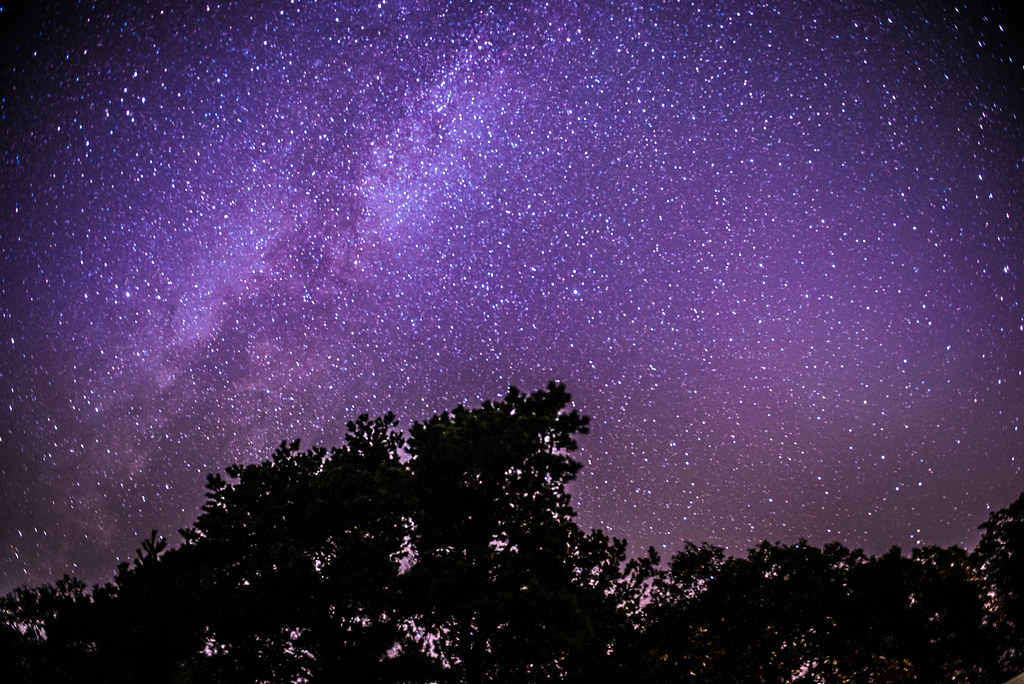
In June he attempted, and failed, to see the North America Nebula in Cygnus. He attempted, and succeeded, to see the Milky Way as a faint band overhead at 1 a.m. on a moonless Sunday. He wrote that it was the first time he had seen the Milky Way from inside the city limits of Karlsruhe.
July was for meteors. He logged the Delta Aquariids near the end of the month, three faint streaks on the night of July 28, none of them photographable but all of them real.
August was the Perseids. He saw twenty-six meteors over the three-night peak from his chair in the garden, which is fewer than he would have seen from a dark site, but more than he had ever counted in one stretch of nights before.
September brought a returning interest in the planets. Saturn was now an evening object and Voss spent several nights simply watching it move slowly against the background of Aquarius.
In October he revisited the Pleiades and noticed, for the first time, the faint trace of nebulosity around them. He could not be sure whether he was seeing the actual Maia Nebula or simply imagining what he had read about. He noted the uncertainty in his log.
November was Andromeda. From his suburban garden, M31 was a marginal object. He logged it on three nights out of eleven attempts.
December returned him to Orion. He sat in the chair on the night of December 21 in a winter coat and recorded that the Orion Nebula now looked, to his eye, more obviously like a cloud rather than a star. He thought this might be improved technique rather than improved sky.
What Voss has at the end of the year is not a catalogue of new discoveries. It is the constellations memorised, the planets' motions internalised, the limits of his sky honestly recorded.
He has bought, for the new year, a pair of 7x50 binoculars. He says he is not abandoning the experiment so much as graduating from it. The naked eye, he has learned, is the slowest of instruments and the one that teaches the most about the sky as it actually is from where one actually stands.