The Vassar College archives, in Poughkeepsie, New York, hold thirty-four bound notebooks belonging to Caroline Ellen Furness, who served as Maria Mitchell's successor at the college's small observatory from 1903 until her death in 1936.
The notebooks span forty-two years. They are written in iron-gall ink in a precise sloping hand that begins firm and clear in 1894 and ends, in the final volume, in a slightly tremulous version of itself.
On the morning of April 9, 2026, an archivist at the college named Devon Chu retrieved volume seventeen from the climate-controlled stacks and set it on a foam cradle in the reading room. The volume covers the year 1909.
The book is a Boorum & Pease No. 6555, ruled both ways, with red gilt edges and a marbled endpaper. Vassar bought a case of them in 1898. Most of Furness's notebooks come from that case. The bindings are intact. The paper is rag-content and has aged gracefully.
Each page is dated at the top right in a small italic. The date is followed by the sidereal time at the start of the session, the local civil time, the temperature in degrees Fahrenheit, the barometric pressure, and a one-word weather note: clear, haze, passing cumulus.
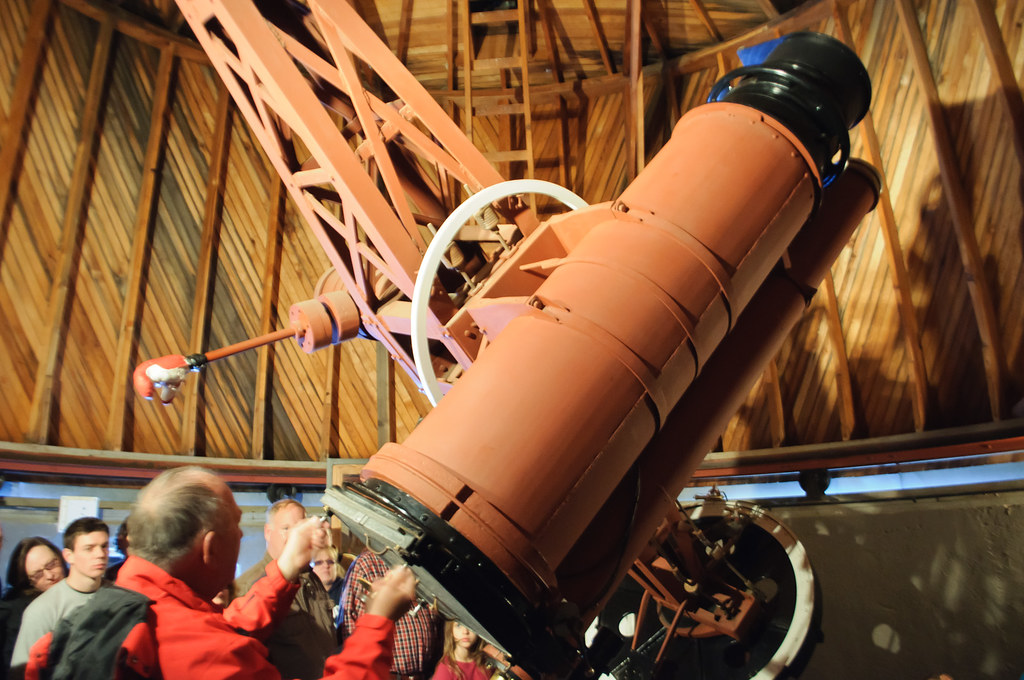
Below this the actual observations begin. Furness was working, in 1909, on a long-running program of double-star measurements with the four-inch Clark refractor that Maria Mitchell had used since 1865. The notebook records position angles, separations, and the magnification employed.
She estimated separation in arcseconds, to one decimal place. She estimated position angle to the nearest degree. Modern micrometry would call her measurements good to within roughly half an arcsecond, which for visual work with a four-inch refractor in 1909 is excellent.
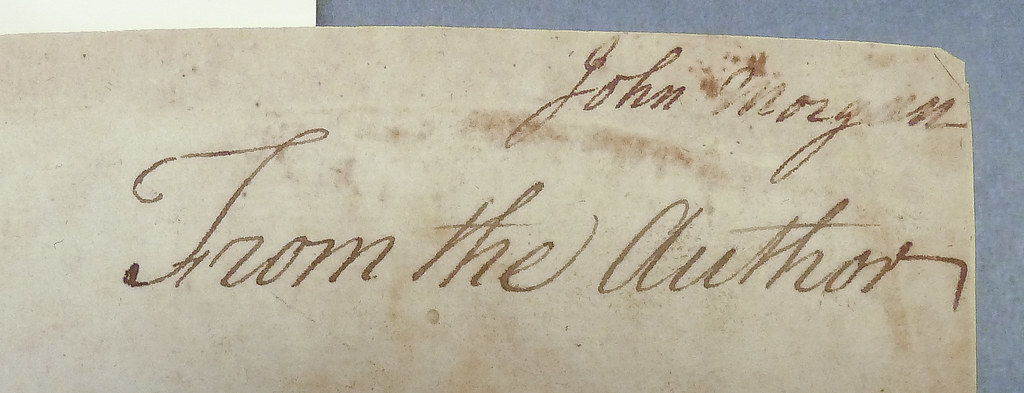
The calligraphy of the notebook is its own argument. The numbers are formed with care. Threes are drawn with two distinct curves rather than the single stroke that became common in mid-century. Sevens are crossed in the European style, although Furness was American.
Where she revised a number she did not erase it. She crossed it through with a single horizontal line and wrote the correction above. The original is always legible. This is not, in 1909, an accident. Scientific journals of the period required that errata be visible. Erasure was considered a form of dishonesty.
Furness used three colours of ink. Black for the body of an observation, red for sums and means at the end of the page, and a thin sepia for cross-references to earlier volumes. The sepia appears, in volume seventeen, eleven times in three hundred and forty pages.
Each cross-reference is a small piece of provenance. A note on a measurement of Castor on the evening of February 12 reads, in sepia, cf. vol. XII, 1904, p. 188; difference of 1.4 in PA noted. Furness was tracing, across her own career, the small drift of one of the most-observed binary stars in the northern sky.
The drift was real. Castor A and B are a true gravitational pair with an orbital period of about four hundred and forty years. Furness's measurements, together with those of dozens of other observers from Herschel forward, fed into the orbital determinations published by Aitken in 1932 and refined by Heintz in 1988.
A modern observer, working with electronic micrometry on a one-metre telescope, can produce in a single night more measurements than Furness produced in a year. Modern measurements are more accurate. They are not, however, more readable.
Readability is what survives. The Vassar volumes have been consulted, by archivists and historians, more than four hundred times since they were accessioned in 1937. The number of citations to Furness's published papers in the same period is approximately ninety. The notebooks are read because they are legible.
Legibility, in 1909, was the result of an apprenticeship. Furness trained under Mitchell from 1894 to 1903. Mitchell had trained under her own father, William, beginning in the 1820s. The notebook hand passed from one observer to the next as a craft, with corrections, with examples, with the older generation looking over the younger one's shoulder at the end of a long night.
The hand is not unique to Vassar. Notebooks of the same period at Harvard College Observatory, at Yerkes, and at Allegheny show the same conventions. The crossed sevens, the sepia cross-references, the red sums at the foot of the page: these are the marks of a discipline that taught itself to write down what it saw in a way that other people, in other decades, would be able to use.
The discipline did not survive the typewriter. By the 1930s, observatory notebooks were increasingly typed up shortly after the observation, with the original pencilled night-record discarded. By the 1960s, most observatories had moved to logbook sheets printed in advance. By the 2000s, electronic logging was standard.
Something was gained. Throughput rose. Errors of transcription fell. The cost of producing a measurement collapsed.
Something was also lost. The electronic log of a modern observation does not, generally, include marginalia. It does not preserve the moment when the observer noticed, in passing, that the seeing had deteriorated, or that a streak of cirrus had crossed the field, or that the telescope drive was making an unfamiliar noise.
Furness's notebooks preserve all of this. The volume for the year 1923 records, on the evening of October 8, that the wind from the east is sharp and the dome shutter is being shaken; observations suspended at 11:47. There is no observation after that line. The next entry is dated October 11.
What we have, in the Vassar archive, is not just a record of double-star positions in the years 1894 to 1936. It is a record of a working observatory, the weather it endured, the instruments it used, the choices it made on a particular Tuesday in October.
Devon Chu closed volume seventeen and replaced it carefully in its box. The reading room is kept at sixty-five degrees Fahrenheit and forty-five percent relative humidity. The notebooks, at this rate of deterioration, will be legible for at least another two hundred years. Whether anyone in 2226 will need to read them is, as Dreyer might have said, a matter for the readers of that century.