On a winter morning in 1888, in the second-floor plate room of the Harvard College Observatory, Williamina Paton Stevens Fleming examined a glass photographic plate of the constellation Orion taken on the night of 23 February 1888 at the observatory's southern station and noticed, in the bright nebulosity south of Zeta Orionis, a small dark intrusion in the shape of an upturned chess knight.
She marked the feature in the observatory's working catalogue as a curiosity. It was assigned the designation B33 only later, in Edward Emerson Barnard's 1919 catalogue of dark nebulae. The popular name, the Horsehead Nebula, would not enter common use until the 1930s.
Fleming was, in 1888, thirty-one years old. She had been at the observatory for nine years. She had been hired as a housekeeper.
Her biography, which has been told often enough to acquire the worn edges of a parable, is the following. Born in Dundee, Scotland, in 1857, she trained as a pupil-teacher, married James Orr Fleming in 1877, emigrated with him to Boston in 1878, was pregnant within months of arrival, and was abandoned by her husband shortly thereafter.
She took domestic work to support herself and the child. One of her employers was Edward Charles Pickering, the director of the Harvard College Observatory. Pickering, it is said, was so frustrated with the work of one of his male assistants that he announced, in the dining room one evening, that his Scottish maid could do the job better.
The story is undocumented and probably embellished. The hiring, which followed within months, is documented. In 1881 Pickering brought Fleming onto the observatory's paid staff as a part-time copyist. By 1886 she was the primary classifier on the Henry Draper Memorial spectroscopic survey.
The classification scheme she used was, in its earliest form, her own. The system that Pickering credited to Fleming in the first volume of the Draper Catalogue, published in 1890, lettered stellar spectra from A through Q on the basis of the strength of the hydrogen Balmer lines. The system was modified later, most consequentially by Annie Jump Cannon, but it is the bones of the modern Harvard sequence.
Fleming classified, by Pickering's accounting, more than ten thousand stars for the 1890 catalogue. She also discovered, between 1881 and her death in 1911, ten novae, fifty-nine gaseous nebulae, and more than three hundred variable stars. The discovery of the Horsehead Nebula is sometimes catalogued separately and sometimes folded into the larger figure.
In 1898 the Harvard Corporation appointed her Curator of Astronomical Photographs. The title was the first formal corporation appointment held by a woman at Harvard.
The pay attached to the appointment was fifteen hundred dollars a year. The corresponding salary for a male assistant at her level was roughly twenty-five hundred. Fleming raised the discrepancy in writing, in a memorandum to Pickering preserved in the observatory's correspondence file, in 1900. The memorandum was acknowledged. The salary was not adjusted.
Her working method has been reconstructed in some detail by historians of the observatory. She worked from glass objective-prism plates, each carrying the smeared spectra of several hundred stars. She used a small loupe of about ten-power. She called out a classification. A junior assistant, almost always another woman from the computing staff, wrote it down.
When she encountered a spectrum that did not fit, she set the plate aside for further examination. The novae and the gaseous nebulae emerged, almost without exception, from this set-aside pile. A nova's spectrum, in the days following maximum, shows bright emission lines that no normal star possesses. They stand out, on a survey plate, like a misprint on a familiar page.
She made her first nova discovery, in the constellation Norma, in 1893. She made her last, in the constellation Lacerta, in 1910, the year before her death.
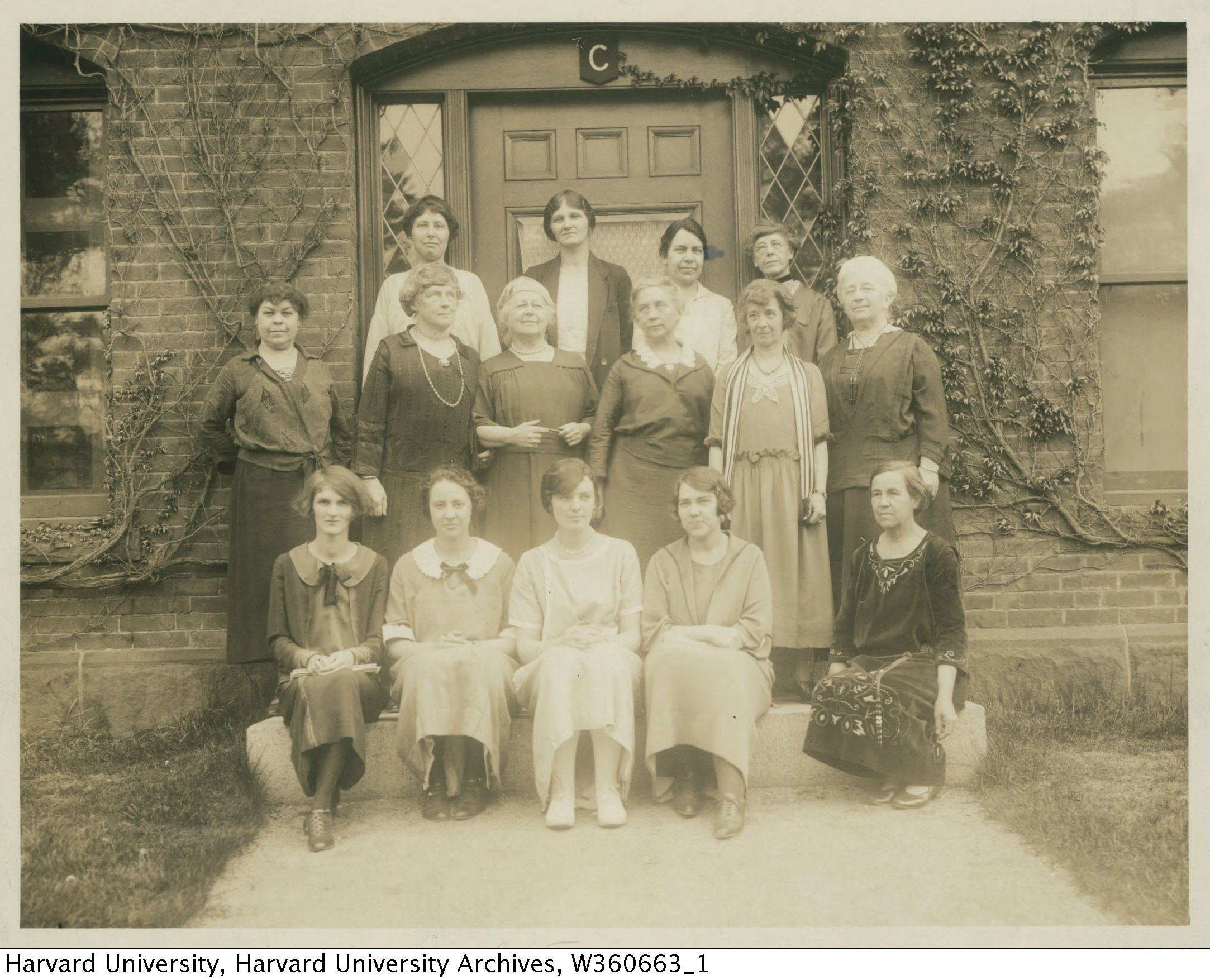
Fleming supervised, by 1900, about a dozen other women on the observatory's computing staff. The group was nicknamed, sometimes affectionately and sometimes not, the Pickering harem. Antonia Maury, Annie Cannon, Henrietta Leavitt, and Florence Cushman all worked under Fleming's day-to-day direction at various points.
Her supervisory style is documented in a diary she kept, in pencil, in a small octavo notebook, for about six months in 1900. The diary was preserved by her son and donated to the Harvard archives in 1937. It is one of the most candid surviving records of the daily life of the observatory in that period.
She wrote, in March 1900, that she had been asked by the director to look over the work of a new male assistant who was being paid twice what the women earned. The man's work, she noted, was acceptable but slow. She added, with a flatness that the page seems to amplify: If one is the right kind of woman one must accept this as one's lot.
She did not always accept it. The 1900 salary memorandum is one piece of evidence. The 1906 letter to Pickering in which she requested funds for a small private telescope at the Boyden Station, so that women on the computing staff could be trained in observational rather than purely reductive work, is another.
The request was declined. The reasons given were budgetary.
Fleming's son, Edward Pickering Fleming, was named for her employer and attended the Massachusetts Institute of Technology. He became a mining engineer. He survived his mother by forty-five years.
Fleming herself died of pneumonia on 21 May 1911, at the age of fifty-four. She had been working in the plate room four days before her death. The Royal Astronomical Society had elected her an honorary fellow in 1906.
The plate on which she had first noticed the Horsehead Nebula, Harvard plate B2312, is still held in the Harvard Plate Stacks. It has been digitised under the DASCH project. The dark feature is, in the digital reproduction, exactly where she said it was.
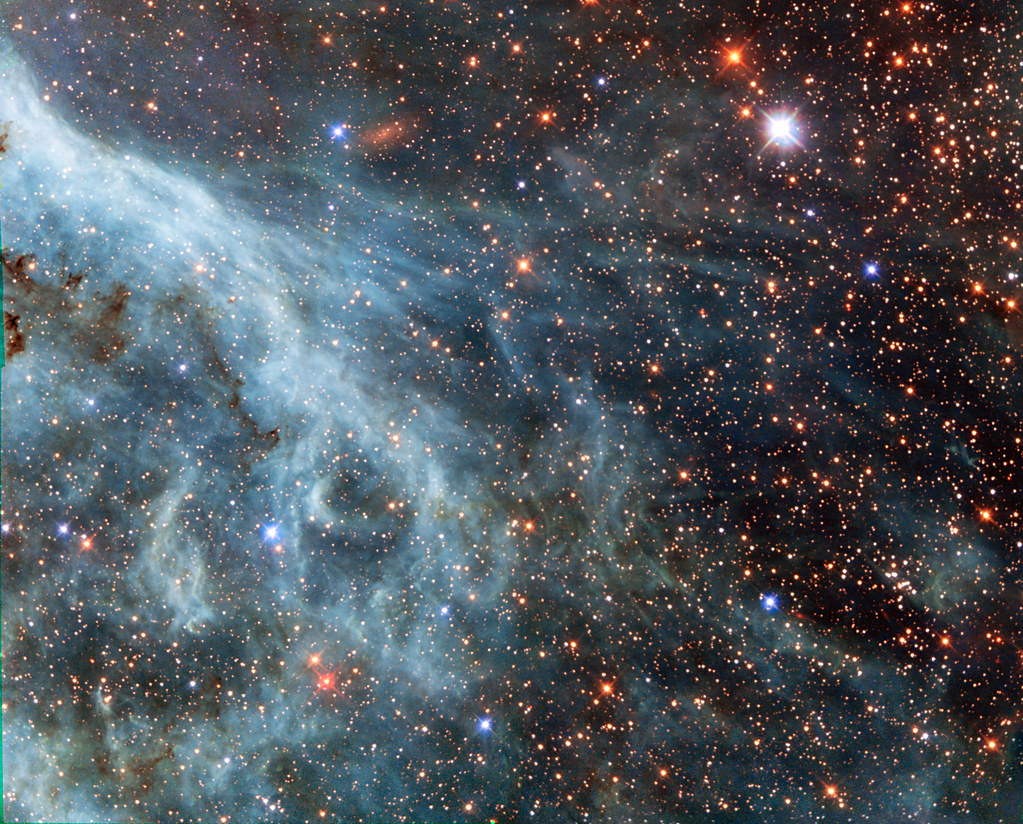
Her discovery has been confirmed, refined, and reinterpreted many times. The Horsehead is now known to be a column of cold molecular gas about three and a half light-years tall, embedded in the larger H-II region IC 434, about fourteen hundred light-years away, and slowly evaporating under the ultraviolet of Sigma Orionis.
The fact that Fleming saw it first is now a stable footnote in the popular literature. It was, for the first half of the twentieth century, not a footnote. The discovery was credited variously to Pickering, to W. H. Pickering, and to Barnard, depending on the textbook.
The correction, when it came, came slowly. The first full-length popular treatment to identify Fleming as the discoverer was Hoffleit's 1965 article in Sky and Telescope. The Wikipedia article reached the same conclusion in 2007, and the correction has propagated outward from there.
She would, on the evidence of her diary, have been amused. She would also, on the evidence of the same diary, have been unsurprised that it took eighty years.