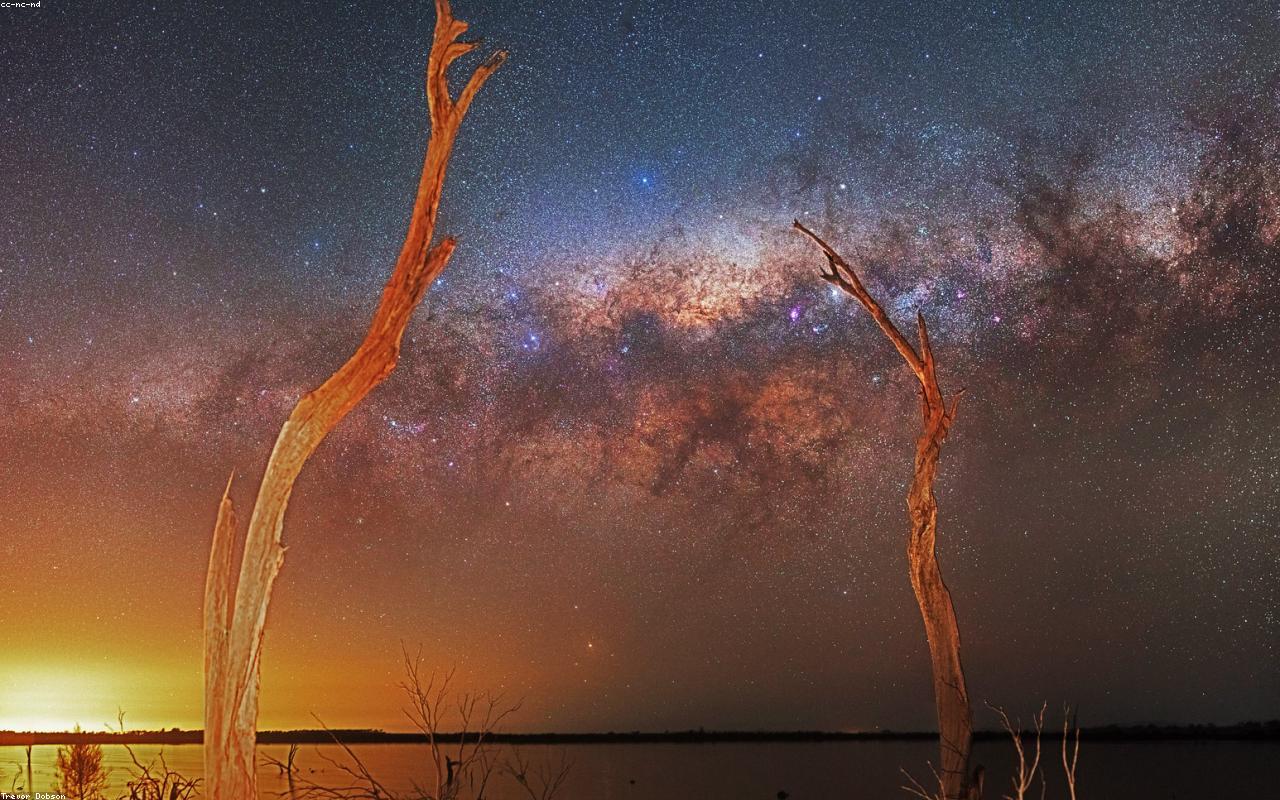
At 22:47 on the night of 9 May 2026, an SQM-L meter held overhead in a field outside Gülpe, Brandenburg, registered 21.84 magnitudes per square arcsecond. That is darker than the average reading from Cerro Tololo in 1998. Gülpe sits ninety kilometres west of the Berlin TV tower.
The reading was taken by Andreas Hänel, who has been measuring this particular polder since 2009. He does it from the same spot every visit, a gravel turnout beside the Havel dyke road, so the numbers stack into a long series. He keeps them in a spreadsheet that now runs to 4,118 lines.
The Westhavelland Sternenpark was certified by the International Dark-Sky Association in February 2014, the first such reserve in continental Europe. It covers about 1,380 square kilometres of marsh, meadow, and small village. Most of it floods at least once a year.
Hänel is a physicist by training. He came to dark-sky work through the back door of light-pollution mapping at Osnabrück, where he kept noticing that the Havelland readings on satellite data looked, frankly, wrong. They were too dark. He drove out one weekend to check, and the field readings were darker still.
The reason Westhavelland is dark is partly geography and partly accident. The land is too wet to develop. The villages are too small to need streetlights of the modern American kind. The largest town inside the reserve, Rhinow, has 1,640 residents and a single petrol station.
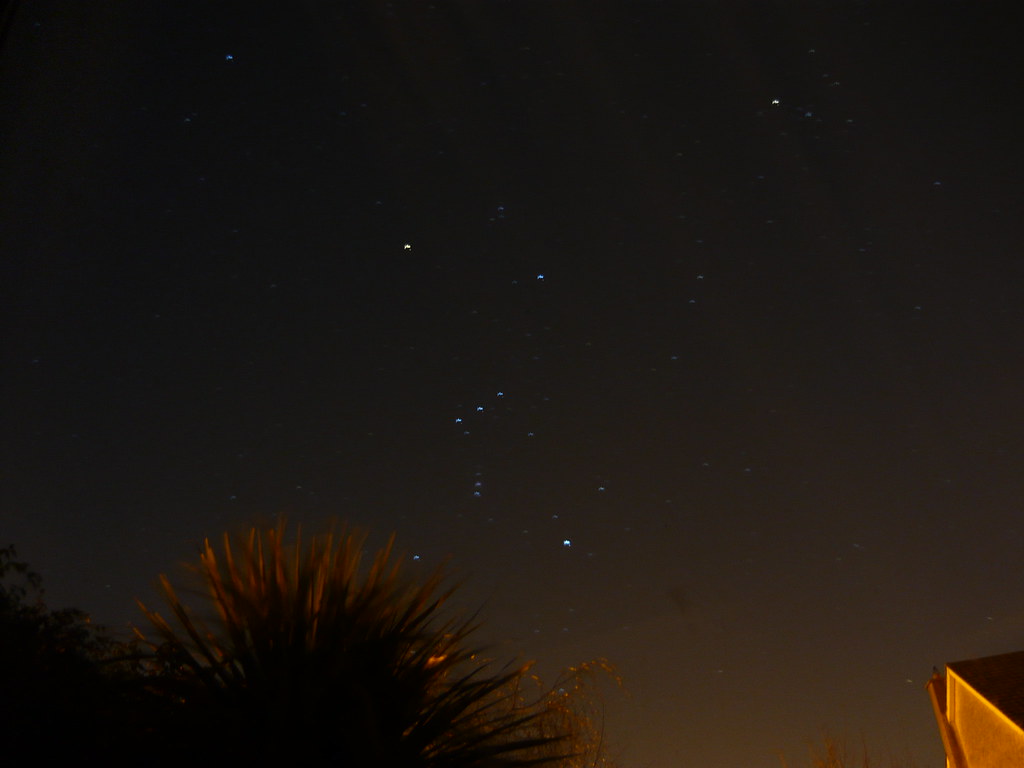
On a clear night the Milky Way casts a faint shadow on white paper held flat against a tripod leg. Hänel demonstrated this to a small group of visitors at the 2026 spring star party, held at the Astronomy Workshop near Gülpe. The shadow is real. It moves with the band.
The reserve has a few rules. Outdoor lights must be fully shielded, warm in colour, and switched off after 22:00 unless safety requires otherwise. The local administration in Havelaue and Milower Land has adapted streetlamps over the past decade, paid for in part by a tourism budget.
Tourism is the unfashionable engine here. Last Light visited on a Saturday in May. Twenty-three cars were parked at the Astronomy Workshop turnout by 21:30. License plates from Berlin, Hamburg, Leipzig, Prague, and one from Utrecht.
Most of the visitors had small telescopes. A few had only binoculars. A man from Spandau, who gave his name as Frank, said he came every new-moon weekend in spring and autumn. He brought his daughter, who is twelve, and a thermos of coffee.
The cranes are the other reason people come. Westhavelland is a major staging ground for the European crane, Grus grus. In October the count can reach 80,000 birds in a single evening. In May the numbers are smaller but the calls go on most of the night.
Hänel made a point of saying that dark-sky work in Germany was much harder twenty years ago. Local councils were sceptical. Streetlamp manufacturers offered little. The shift came partly from LED retrofitting, which made shielded warm-white fixtures cheaper, and partly from a younger generation of administrators willing to listen.
He also said that the work is not finished. New industrial sites south of the reserve, near Rathenow, have added skyglow on the southern horizon. A logistics warehouse opened in 2024 with unshielded floodlights. After complaints and a small newspaper article, the operators agreed to shield them. It took eleven months.
The reserve has a citizen-science programme that any visitor can join. The instructions are simple. You take an SQM reading from a designated site, log the time and conditions, and email the result to the workshop. Hänel reads every entry.
The data set, modest as it is, has been useful. It contributed to a 2022 paper in the journal Remote Sensing on long-term skyglow trends across Brandenburg. The paper found that Westhavelland had darkened slightly between 2014 and 2021, against the regional trend.
Darkening is rare. Most well-monitored sites in central Europe have grown brighter by between 2 and 6 percent annually since 2012. Westhavelland's modest improvement is attributed to local lighting retrofits and a relative absence of new development.
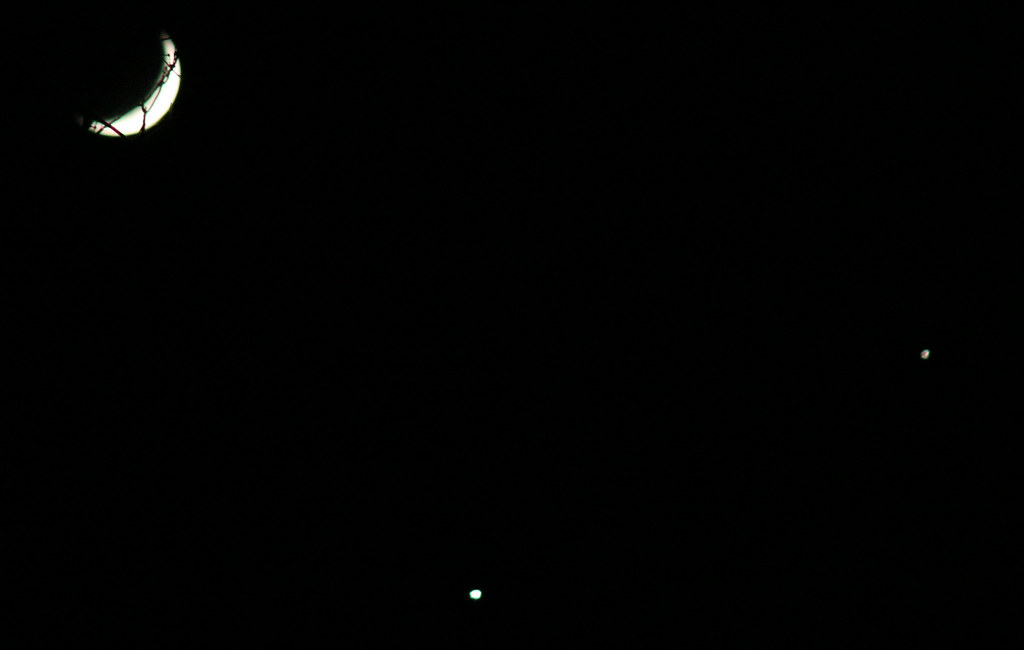
On the night of the visit, Saturn rose over the southeastern horizon at 02:14. By 03:00 the zodiacal light was visible as a faint cone above the marsh, leaning eastward along the ecliptic. Three of the twenty-three observers were still out. The rest had gone to sleep in their cars or in the nearby Pension Storchennest.
The dawn chorus began at 04:18. Reed warblers, then a cuckoo somewhere across the river. A single crane called from the north. The eastern sky had begun to lighten by then, but the zodiacal light was still visible, fading into the dawn.
Hänel was packing up. He had taken his last reading of the night at 02:50, 21.79 magnitudes per square arcsecond. A small drop from the earlier number, which he attributed to a thin high cirrus that had moved in around midnight.
Asked whether he was optimistic about the long-term future of the reserve, he paused. He said he was cautiously hopeful, which from a German physicist amounts to a small endorsement. The pressures, he said, are real. So is the work.